Highlights from Experian #CreditChat with Jeanne Kelly
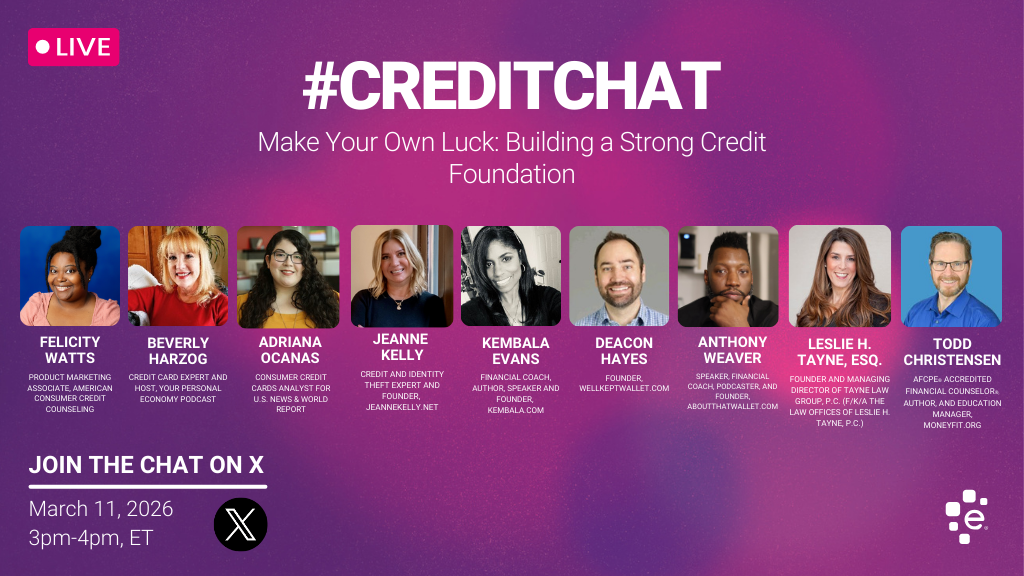
I recently had the pleasure of joining Experian as a panelist for their #CreditChat conversation on “Make Your Own Luck: Building a Strong Credit Foundation.”
With a last name like Kelly, you might think I believe in luck. But when it comes to credit, what I’ve learned after more than 25 years in this field is that luck usually comes from preparation, awareness, and smart habits.
I truly felt lucky to be part of this conversation with Experian and the community discussing one of the most important financial topics we all face: building strong credit.
Here are some of the key insights I shared during the chat.
Healthy Credit Isn’t Luck — It’s Strategy
When I hear the phrase “make your own luck” in the context of credit, I think about taking ownership of your financial story.
Credit doesn’t improve by accident. It improves when you understand how the system works and make intentional decisions.
Healthy credit creates opportunities.
Better credit can mean:
• Lower interest rates
• More financial options
• Greater negotiating power
• Less financial stress
When you understand your credit, you start creating your own financial luck.
Credit Is the Foundation of Wealth
One thing I often say surprises people:
Credit is the foundation of wealth.
Think about it this way. If your credit isn’t strong, you may pay more in interest.
Even a difference of 1–2% on a mortgage can cost tens of thousands of dollars over time. That’s money that could have stayed in your pocket and been invested elsewhere.
Strong credit helps you access better financial terms, and that creates long-term financial advantages.
Starting Your Credit Journey
If you’re just beginning to build credit, start simple and intentional.
A good starting foundation often includes:
• A credit card (secured if needed)
• A small installment loan
Having both types of accounts helps establish payment history and credit mix, which are important components of your credit score.
Consistency over time is what builds a strong profile.
Pay Attention to What’s Being Reported
Your credit report is the story lenders see about you.
One of the most important habits you can build is simply paying attention to what’s being reported.
Review your credit report regularly. When you do, you can catch errors earlier and make smarter decisions about your accounts.
I often say awareness is one of the most powerful credit tools you have.
Auto-Pay Helps, But Don’t Set It and Forget It
Automatic payments can be a great system to help ensure payments are made on time.
But I always recommend reviewing your statements and confirming payments actually cleared your bank account.
Your credit is too important to leave entirely on autopilot.
Staying aware of your accounts is one of the best ways to protect your credit health.
Credit Traps to Watch For
One situation I see happen more often than people realize involves mortgage payments set up through bank bill pay systems.
If escrow changes cause the mortgage payment amount to increase, the old payment amount may still be sent through the bank. That can lead to underpayment and potentially a late payment.
The best protection is reviewing statements and confirming the correct payment amount.
Check Your Credit Regularly
One of my top credit rules is simple:
Check your credit reports regularly.
When you review your reports often, it becomes much easier to catch errors or identity issues early.
I typically recommend reviewing your credit reports at least twice a year.
The more aware you are, the easier it is to stay in control.
Watch Out for “Too Easy” Credit Options
Some financial tools can look convenient in the moment but create complications later.
One example is Buy Now, Pay Later programs.
Depending on how they report, multiple purchases can create additional accounts or reporting activity that may impact your credit profile over time.
Before using any financial product, it’s important to understand how it reports to the credit bureaus.
One Golden Rule for Stronger Credit
If there’s one rule I’d emphasize for building stronger credit this year, it’s this:
Lower your credit card balances.
High balances can significantly impact your credit score. Reducing balances even gradually can make a meaningful difference in your credit health.
Start with one account and work your way down.
Small steps create momentum.
Final Thoughts
The theme of this #CreditChat was “Make Your Own Luck.”
In my experience, financial luck is rarely random. It comes from understanding your numbers, paying attention to your credit habits, and making small, consistent decisions that support your long-term goals.
Thank you again to Experian for inviting me to join this conversation.
When you understand how credit works, you’re not leaving your financial future to chance.
You’re building it intentionally.