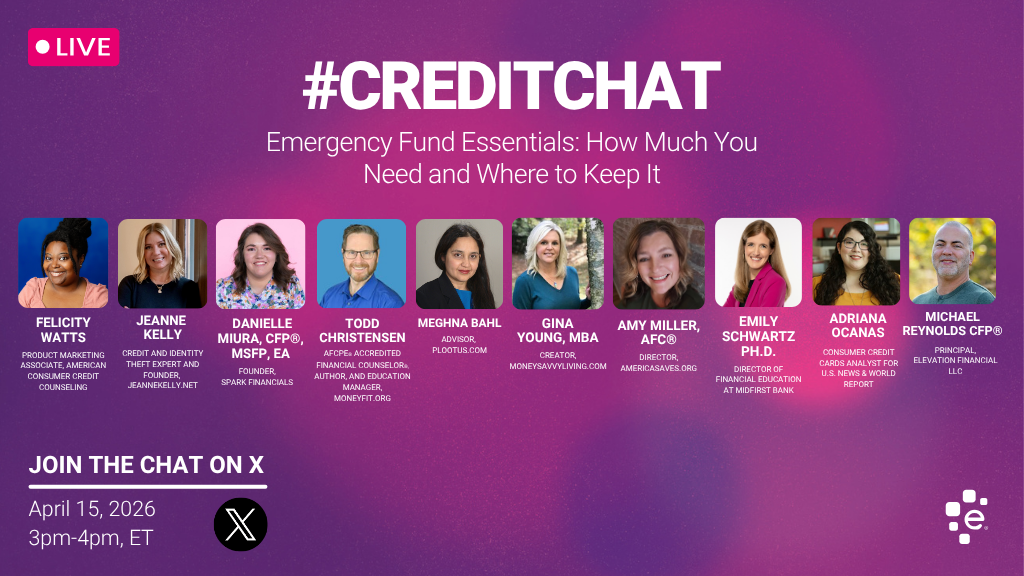
This week I was a guest on the panel for Experian #CreditChat was one of those conversations that hits differently.
We talked about emergency funds, but not in the usual way. Not just numbers, not just “save 3 to 6 months.”
We talked about how it feels to have one… and how it feels when you don’t.
Because an emergency fund isn’t just about money.
It’s about how you show up in your life.
It Starts Smaller Than You Think
When I first started saving, I wasn’t thinking about six months of expenses.
I was just happy to have anything extra.
That’s where most people are, and that’s okay.
Over time, I worked my way to covering three months of expenses. Then six. And that’s when something shifted.
It wasn’t just the number in the account.
It was the calm that came with it.
The Real Value Is Emotional
Having money set aside changes your decision-making.
You’re not reacting.
You’re not rushing.
You’re not saying yes to things just because you feel stuck.
You get to pause.
And that pause is powerful.
It protects your credit.
It protects your choices.
It protects your peace.
It’s Not About Perfection, It’s About Starting
There’s always a question of how much you “should” have saved.
Three months. Six months. More.
If you can build to six months, beautiful.
But if you’re at zero right now, that’s not where your focus should be.
Your focus should be on starting.
Even a small amount begins to shift your mindset. You go from feeling behind to feeling in motion.
And that matters more than people realize.
Safety Before Strategy
A lot of people ask how to balance saving with paying down debt.
And while every situation is different, there’s something important to think about:
If something unexpected happens, what are you relying on?
Without savings, most people turn to credit cards.
And that’s where high interest starts to build and stress follows right behind it.
Creating a cushion, even a small one, gives you options.
And options are everything when it comes to financial wellness.
Where You Keep It Matters
This isn’t about hiding money.
It’s about placing it somewhere that supports you.
A high-yield savings account is one of the simplest ways to do that.
Your money stays accessible, it’s safe, and it grows quietly in the background.
No complexity. Just intention.
Consistency Over Intensity
Saving doesn’t have to feel overwhelming.
In fact, it works better when it doesn’t.
Automating even a small percentage of your income builds a habit. And that habit builds trust.
You start to see yourself differently.
You’re no longer someone trying to “figure it out.”
You’re someone who follows through.
Your Environment Matters More Than You Think
Money is one of those things people don’t talk about enough.
But when you start having conversations about it, something changes.
You don’t need to share everything.
You don’t need to compare.
But being around people who are thinking about growth, goals, and financial wellness helps you stay aligned.
It becomes part of your lifestyle.
Even With Irregular Income, You Can Build This
If your income isn’t consistent, your approach doesn’t need to be perfect.
But your awareness does.
You still know what your monthly expenses look like.
You still know what stability would feel like.
So you build toward that, one deposit at a time.
It’s not about getting it exactly right.
It’s about staying connected to the goal.
Small Wins Change Everything
Starting from zero can feel overwhelming.
But the first $25 matters.
Then $100.
Then $200.
At some point, you stop looking at it as “not enough” and start seeing it as progress.
And that shift is where confidence begins.